
UK Vehicle Tracking: Laws, Track Vehicle & Car Delivery Service
If you’re wondering “can I track my car during UK vehicle delivery,” many car delivery services, dealerships and auction houses now offer real-time GPS tracking and tracking numbers so you can monitor route progress, delivery date and expected vehicle collection; legitimate business uses of vehicle tracking and tracking devices—for example to protect vehicle safety, manage mileage, speed and inspections, or in case of theft—are generally permitted under UK law but must comply with the General Data Protection Regulation (GDPR) and tracking policies that protect employee privacy and personal data, especially outside work hours or during personal use without employee consent. Best practices for fleet management and tailored solutions include clear transparency on tracking use, written consent where required, limiting location data retention, and technical measures such as geofencing, alerts, and m2m SIM cards for global coverage and reliable battery life in GPS trackers and smartphones. Whether you are a dealer arranging collection and delivery or a customer tracking a car without physical presence, choose companies that publish their tracking solutions, provide notification of tracking data use, explain legal obligations and protections, and offer robust support for cases of theft to avoid significant legal or financial penalties while ensuring vehicle delivery runs smoothly across the UK mainland.
Understanding Vehicle Tracking in the UK
If you’re wondering “can I track my car during UK vehicle delivery”, the short answer is yes in many cases: dealerships often provide GPS tracking or live updates so you can monitor progress from collection to drop-off, and app-based services or courier tracking mean your vehicle may be followed in real time; however, availability depends on the seller and delivery method, so confirm with the dealership whether they offer tracking, what data they share, and any privacy or insurance implications before dispatch.
What is Vehicle Tracking?
Vehicle tracking is a GPS-based tracking system that lets you track a vehicle in real-time, using a tracker or GPS tracker installed in a car or connected to smartphones and m2m SIM cards to provide global coverage and reliable tracking data; it is widely used for fleet management, collection and delivery, car delivery service and dealership movements to monitor route, mileage, speed and vehicle safety, and to provide a tracking number or delivery date notification during the delivery process. In the UK, vehicle tracking must balance legitimate business needs with employee privacy — significant legal and financial penalties can arise under UK law and the General Data Protection Regulation (GDPR) if tracking policies are unclear, tracking during personal use occurs without employee consent, or location data is processed without transparency; for example a car may be tracked during work hours but not outside work hours or during personal use unless specific consent and safeguards are in place. Best practices and tailored solutions for auctions, dealerships, and company vehicles include precise tracking, alerts for unauthorised movement or theft, inspection logs, battery life and smartphone notification management, and a policy that protects employee privacy while enabling theft recovery, vehicle collection, and improved fleet performance.
Types of Tracking Systems
If you’re asking “can I track my car during UK vehicle delivery,” the answer is usually yes: most delivery services use a variety of tracking systems such as GPS-based real-time tracking, telematics platforms, GSM/satellite trackers and RFID tags to monitor location, route progress and estimated time of arrival; customers can often follow progress through a vehicle tracking app or courier tracking portal, receive ETA updates and set geofencing or security alerts so you know exactly when your car is en route or has been delivered.
How GPS Tracking Works
GPS location tracking enables you to track your vehicle location in real time from anywhere in the world. GPS trackers can provide real-time vehicle tracking and send essential alerts based on location data. Vehicle asset tracking leverages GPS technology to monitor the location and status of vehicles and equipment in real-time.
UK Vehicle Tracking Laws
UK vehicle tracking laws allow you to track your car during UK vehicle delivery in many cases, but there are important legal and privacy limits: if you own the vehicle or have the owner’s explicit consent you can lawfully install or use a GPS tracker and monitor its location; commercial couriers and vehicle transport firms commonly provide live tracking as part of their service and must disclose how location data is used under data protection (GDPR) rules; covertly tracking someone else’s vehicle without consent can breach privacy laws, harassment provisions or other criminal statutes, so always check the delivery company’s terms, confirm ownership/consent, and review their data-handling and notification practices—when in doubt ask the carrier or seek legal advice before tracking during delivery.
Overview of UK Vehicle Tracking Laws
Tracking company vehicles is legal under UK law, but strict regulations protect employee rights and privacy. Two primary laws govern vehicle tracking: the Human Rights Act 1998 and the General Data Protection Regulation (GDPR). UK law mandates that drivers must be informed about tracking. Covert monitoring is illegal unless specific conditions—such as preventing theft—are met, and even then, the driver must be aware.
Read more about our other article, Car Transport Service: Find the Right Car Shipping Companies, for more information.
GDPR Compliance in Vehicle Tracking
GDPR regulates how employers collect, store, and use data from tracking systems. Under GDPR, location data qualifies as personal data, requiring businesses to adhere to the following principles: Transparency, Data Minimisation, Data Security, and Employee Consent. Non-compliance with GDPR can result in fines of up to €20 million or 4% of global annual turnover, whichever is higher. Use robust encryption, access controls, and regular audits to safeguard tracking data. Only collect data relevant to business operations.
Employee Consent and Location Tracking
Article 8 of the Human Rights Act guarantees employees the right to privacy, including during work-related activities. Employers must notify drivers about tracking. For company vehicles used outside work hours, employers must provide drivers with a way to disable tracking during personal use. Failure to comply with these requirements could result in legal challenges, employee dissatisfaction, and financial penalties. Obtain explicit consent from employees, preferably in writing, and allow them to access their data upon request. Include tracking policies in employment contracts or separate agreements. Employees should sign these documents to confirm their understanding and consent to tracking practices.
The Role of GPS in Fleet Management
GPS plays a central role in modern fleet management by providing real-time location data, route optimization, and delivery status updates that answer common customer questions such as “Can I track my car during UK vehicle delivery?” Fleet managers use GPS to monitor vehicle progress, predict arrival times, quickly resolve delays, and maintain clear communication with customers and drivers throughout the transit. In addition to live tracking, GPS systems record trip histories for security, compliance, and performance analysis, helping companies reduce fuel use, improve routing efficiency, and respond promptly to incidents. Overall, integrating GPS into fleet operations enhances transparency, accountability, and customer confidence during every stage of vehicle delivery across the UK.
Benefits of GPS Tracking for Fleets
Fleet tracking for company vehicles is an indispensable tool for businesses. It enhances operational efficiency, reduces fuel costs, and protects valuable assets. Compliant fleet tracking offers numerous advantages beyond avoiding fines, including building employee trust, improving operational efficiency, and protecting business reputation. Vehicle asset tracking delivers significant cost savings across multiple aspects of fleet management. GPS tracking and Telematics technology improve the efficiency and productivity of vehicle fleets.
Real-Time Tracking and Alerts
Vehicle asset tracking plays a critical role in reducing theft and unauthorised usage. Real-time data provides precise information about the location and activity of each asset, offering transparency and accountability. Real-time tracking provides up-to-the-minute updates on vehicle locations and activities, enhancing operational visibility. Common alerts are geofencing, speed alert, vibrational/shock alert, and ignition alerts. Alerts send essential, vital information about the car’s whereabouts. A tracking alert can be received in a smartphone, PC, or tablet via push notification and emails.
Choosing the Right GPS Tracker
Choosing the right GPS tracker is essential if you want to know if I can track my car during UK vehicle delivery, so start by identifying your priorities, such as real-time location updates, geofencing alerts, battery life, and stealth installation options. For vehicle deliveries within the UK, look for trackers that support reliable cellular networks and offer detailed delivery-mode features like route history, estimated time of arrival, and tamper alerts; devices with SIM cards and widespread coverage reduce the risk of losing signal in transit. Consider whether you need a hardwired unit for continuous power or a plug-in OBD-II tracker for easy installation and removal, and check subscription costs for data and app access to ensure long-term affordability. Read reviews and choose a provider with strong customer support and clear legal guidance, since using trackers for delivery must comply with privacy and consent rules in the UK. Finally, confirm the tracker’s size and mounting options to keep it hidden and secure throughout the delivery process.
Car Delivery Service and Vehicle Delivery
When using a car delivery service or arranging vehicle delivery in the UK, many customers ask, “Can I track my car during UK vehicle delivery?” The good news is that most reputable transport companies now offer real-time tracking or regular location updates via GPS, email, or a mobile app so you can follow progress from collection to drop-off; before booking, check that the provider offers tracking, ask what information they’ll share (estimated arrival times, driver contact, vehicle status), and confirm any extra cost for live tracking. Tracking not only provides peace of mind but also helps coordinate handover at your address, manage timing on busy days, and reduce missed delivery windows—make sure to request tracking details and conditional insurance coverage for the journey to ensure a smooth, transparent delivery experience.
The Delivery Process Explained
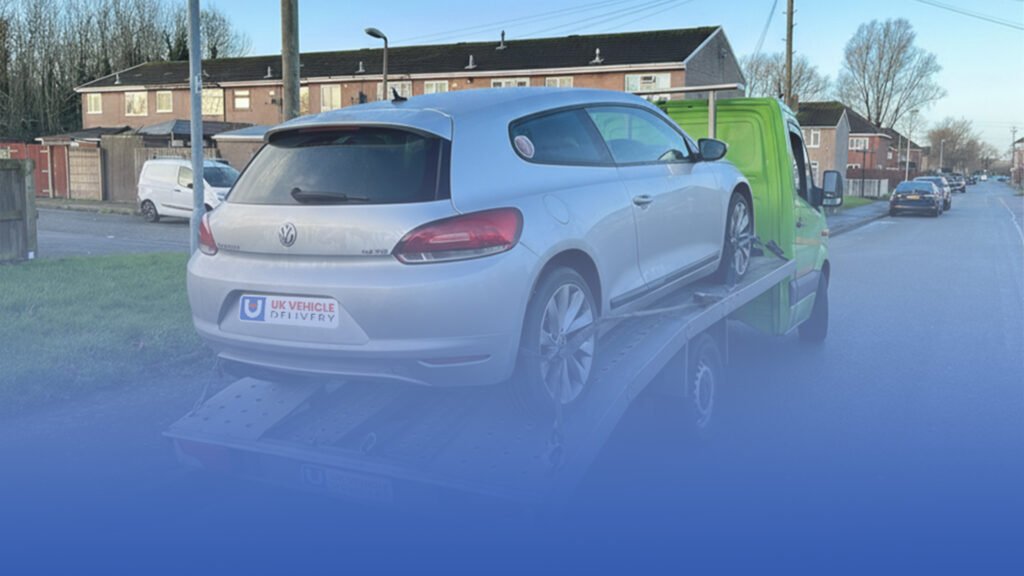
Car delivery services are professional companies that specialize in transporting vehicles from one location to another. The first step is to request a quote from a car delivery company. Once you’ve received your quote, you can schedule a pickup time that works for you. Before your car is picked up, it’s essential to ensure it’s ready for transport, including checking the Documentation and Condition Report. Once your vehicle is picked up, it will be loaded onto the transport truck, and you can often track your vehicle’s journey via GPS to stay informed of its location in real-time. Your car will be delivered to the designated area at the agreed time. Before accepting delivery, inspect the vehicle and compare it with the original condition report to ensure there’s no damage.
Using Tracking Devices for Delivery Services
You can track your driver in real time to see exactly where your vehicle is. At UK Vehicle Delivery, we pride ourselves on offering top-notch service, a commitment to customer satisfaction, and real-time GPS tracking for peace of mind.
Notifications and Updates for Customers
During transportation, you can often track your vehicle’s journey via GPS to stay informed of its real-time location.
Implementing a Vehicle Tracking System
Implementing a vehicle tracking system involves selecting reliable GPS hardware, integrating it with a cloud-based telematics platform and coordinating with your transport partner so customers can answer common questions like “can i track my car during uk vehicle delivery”; by equipping each consignment with an installed or temporary GPS tracker and linking it to a secure web or mobile dashboard, you can provide real-time location, estimated arrival times and geofence alerts, while ensuring compliance with UK data protection rules and explicit consent from the vehicle owner; to make deployment simpler, choose devices with long battery life and cellular coverage across the UK, use a platform that supports API integration with logistics providers for live status updates, implement role-based access and encrypted communications for privacy, and offer automated SMS or email notifications so customers receive timely tracking information without needing technical expertise.
Factors to Consider When Choosing a Tracker
When deciding whether and how you can track your car during UK vehicle delivery, consider several key factors: network coverage and GPS accuracy to ensure real-time location updates across the routes used in the UK; the device’s power source and battery life (hardwired versus battery-powered) so tracking remains uninterrupted during transit; installation method and compatibility with your vehicle and the delivery company’s procedures; update frequency and alert features such as geofencing, movement, speed and tamper notifications so you receive timely information; data security and privacy compliance (GDPR) to protect personal information; provider reliability, reviews and customer support to handle queries or disputes; subscription costs, data plans and any roaming charges if the route crosses borders; and integration options with shipment tracking portals or third-party apps for a single view of the delivery. Evaluating these factors will help you choose a tracker that effectively and securely answers “Can I track my car during UK vehicle delivery?”
Integrating Tracking Systems with Smartphones
If you have an old smartphone, you can turn it into a GPS location tracker to track a car. Smartphones have an inbuilt GPS receiver which can be used for this purpose. Alerts can be received on a smartphone, PC, or tablet via push notification and emails.
Managing Mileage and Fleet Efficiency
Under GDPR, location data qualifies as personal data, requiring businesses to adhere to the following principles: Data Minimisation. GPSLive software displays fuel usage, wasted fuel (idling), fuel fillings, and thefts. Vehicle asset tracking delivers significant cost savings across multiple aspects of fleet management. Monitoring driver behaviour can lead to improved practices, such as reducing excessive idling or speeding, which in turn lowers fuel consumption.
To stay compliant with the UK transport regulations, every business should stay up to date with the official guidance published by the UK government on trade plate vehicle use (see the latest document here: https://www.gov.uk/vehicle-registration/trade-licence-plates).
For more information on our vehicle delivery process, please visit our Service Page at www.ukvehicledelivery.co.uk.